
 4.9 out of 5 based on over 280 reviews
 Sell your saddle
 Request a Saddle
Dressage Saddles for Sale
Choosing a Second Hand
Dressage Saddle
A dressage saddle can be a total game-changer for your riding position. Unlike jump or GP saddles, they are specifically engineered to help you achieve that signature, elegant, vertical alignment.
Finding the right one, as wth any saddle, is highly personal. Because every rider’s proportions are unique – perhaps you have long legs or a shorter torso – the proper fit is as vital for you as it is for your horse.
Beyond those basics, it often comes down to feel: do you prefer a deep seat with large blocks to keep you secure, or a minimalist, close-contact design that offers more freedom?
In this guide, we’ll break down what to look for when shopping the second-hand dressage saddle market, from key technical features to finding the perfect match for your horse's back.
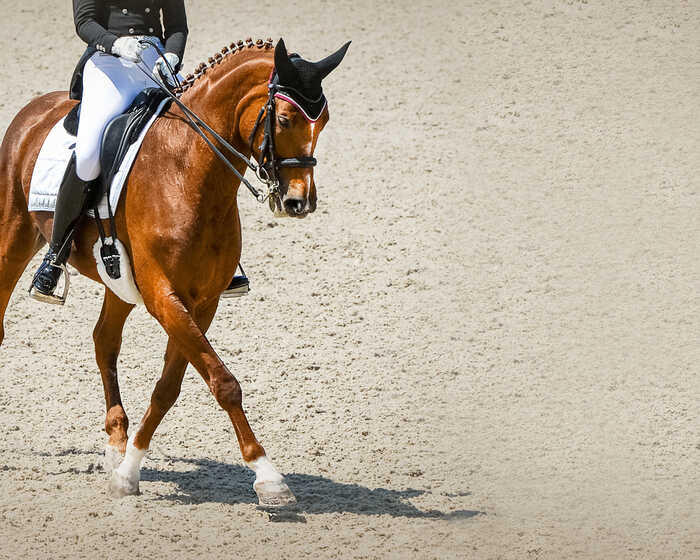
What to look for in a dressage saddle
Key features that make all the difference
Dressage saddles are designed to support a longer leg and a more upright upper body. Compared with a GP, the flap is straighter, the seat is typically deeper, and the blocks are designed to support the leg without pushing it out of position.
The overall effect is a saddle that helps the rider remain centred.
Elsewhere, seat depth plays a big part in how secure a saddle feels. Some riders love a very deep seat because it gives a secure, held feeling, while others prefer something a little more open.
The Albion Fabrento Dressage Saddle is a good example of a deeper seated model designed for rider security, with supple calf leather and a short back panel that suits many modern sports horses.
Block style is equally personal. Large surface-mounted or fixed thigh blocks can provide plenty of support, which some riders find reassuring when first switching from a GP.
Others, meanwhile, prefer a little more freedom through the thigh. The Fairfax Gareth Dressage Saddle features surface-mounted thigh blocks that support the rider while still allowing a close feel.
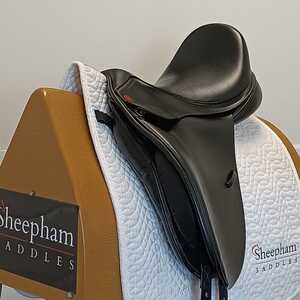
How panel shape affects the horse
Matching the saddle to the back
Panel configuration has a direct effect on comfort and balance. Some horses suit a low-profile, close-contact feel, while others need a little more support through the panel or extra room at the withers.
The Kent & Masters Low Profile Dressage Saddle is a great option for riders who want a professional, close-contact feel, with low-profile flocked panels and adaptable thigh blocks.
Horses with broader, flatter shapes may suit something different. The Harry Dabbs Platinum Dressage Saddle has close contact panels, an open head for withers and flatter backs, and a design intended to leave the lumbar region freer.
Some riders also prefer a slightly more traditional feel in the seat and block. This Ideal Jessica Dressage offers a medium-deep seat, medium knee blocks, and flocked panels that provide good spine clearance and that all-important freedom of movement.
Changing from a GP to a dressage saddle
What riders often notice first
Moving into a dressage saddle for the first time is a bit of a gear shift.
You’ll likely notice your leg dropping into a longer, more vertical position, and instead of feeling "perched" on top, you’ll feel like you’re sitting much more around the horse.
While some riders love that deeper, secure seat immediately, it’s perfectly normal to need a few rides to find your balance and settle into the new alignment.
It’s common for riders moving from a GP to worry that a dressage saddle might feel a bit restrictive. In reality, the right fit should support your natural position without making you feel "locked" in.
If you’re unsure about what you’re feeling in the seat, a professional saddle fitter can help, and we’re always on hand to help narrow down the options before you even book a trial.
Having that chat first can save a lot of guesswork, particularly when you’re weighing up different tree shapes or brands. If you're still figuring out which features work for you, browsing the full second-hand dressage saddle collection is a great way to see what’s available.
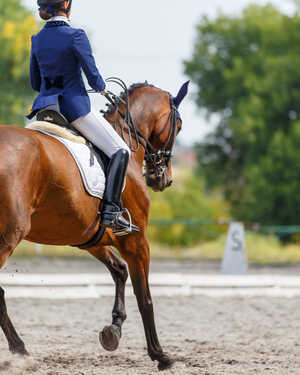
The value of a 5-day trial
A saddle can look perfect on paper but feel completely different once you’re actually in the seat.
A saddle trial is your chance to see if it really helps your balance and to feel how your horse moves underneath you. You’ll get far more information from a few transitions, turns, and a bit of lateral work than you ever could from a static fitting.
Sheepham’s 5-Day Trial gives you the space to test things out at home in your own time – especially useful if you’re moving into your first dressage saddle, as that transition from a GP usually starts to click after a few sessions rather than one quick sit.
It’s always a good idea to involve your fitter during the trial, too. They can check the panel contact, shoulder freedom, and your overall alignment with a trained eye – giving you that extra bit of confidence that you’ve found the right match.
If you are ready to start looking, browse the full range of second-hand saddles or get in touch to discuss your options before ordering a trial.
Posted on April 22nd 2026
 Updating page...